
WHAT IS LAMINATED TIMBER?
Pieces of timber which have been glued together by the application of pressure along the glue line. Sometimes referred to as "bonding", "gluing", "pressing" or "engineered" timber.
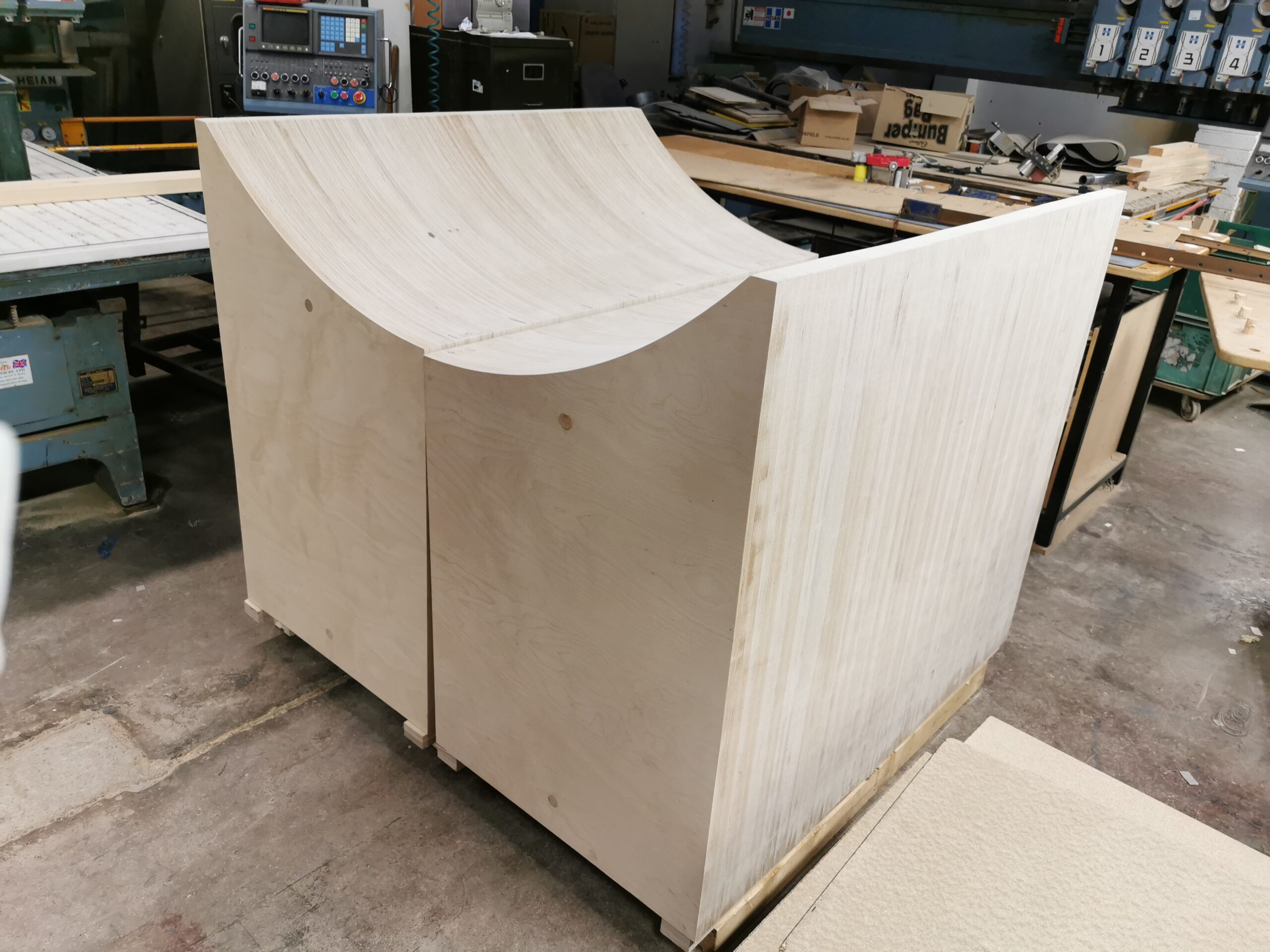
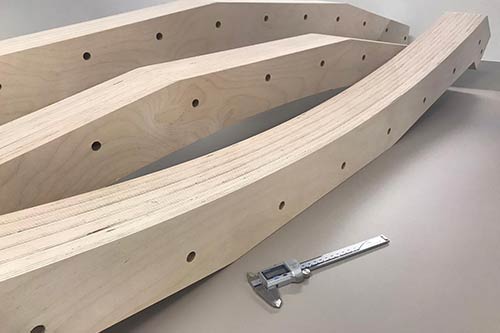
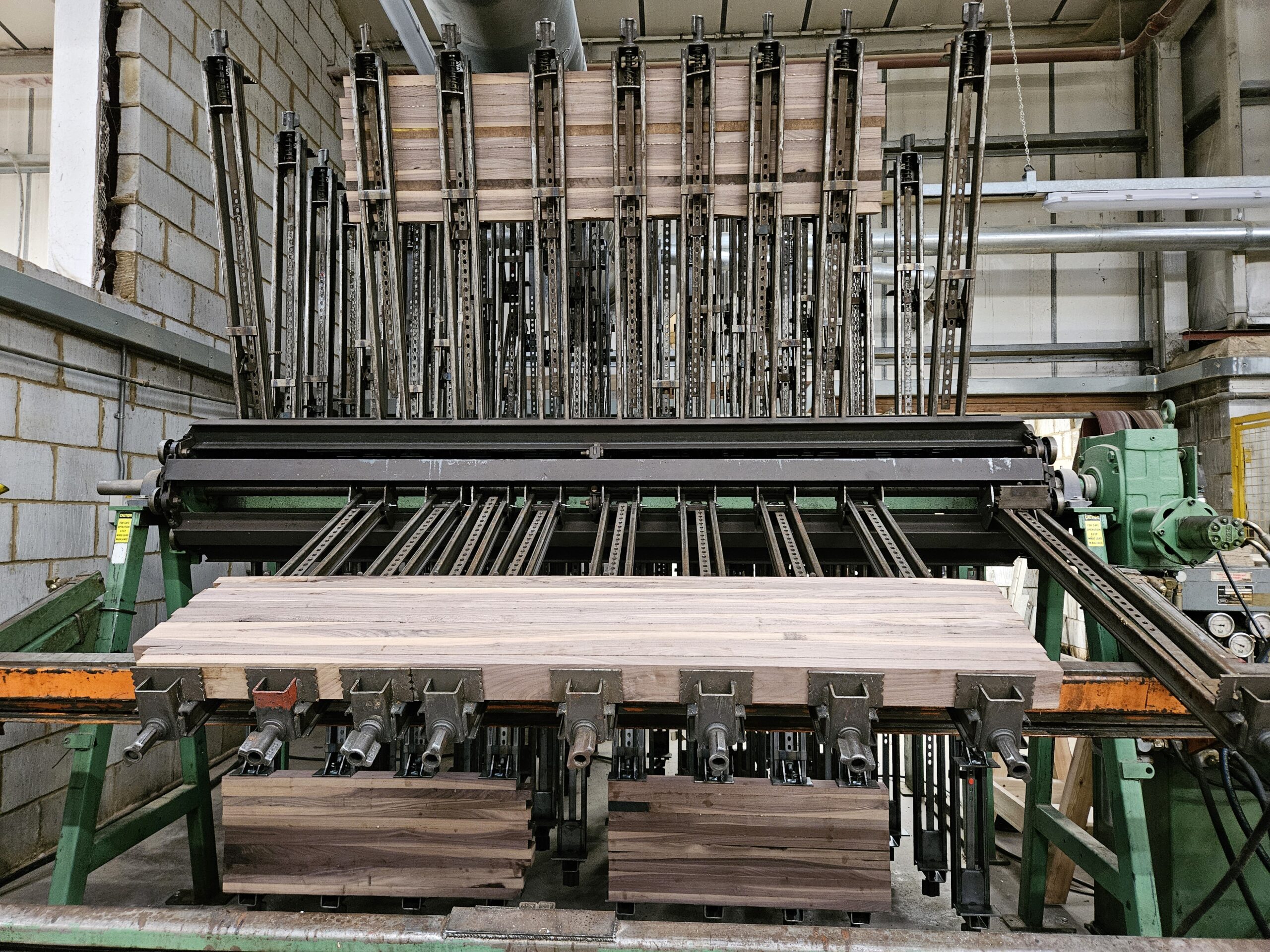
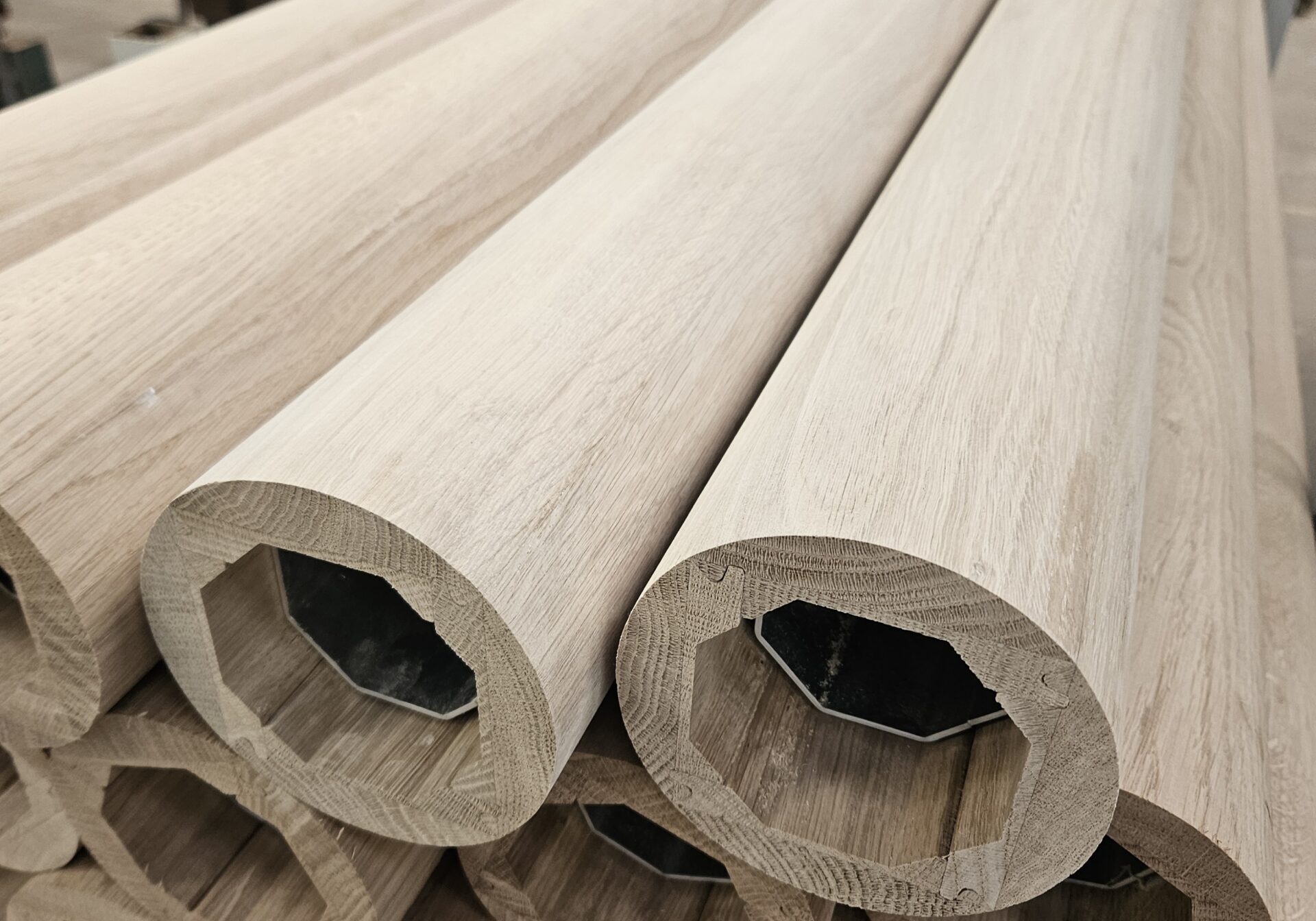
Laminated timber may refer to solid timbers, such as Oak, Iroko, Ash, Douglas Fir or Beech, or panel products such as plywood or MDF. We can laminate both, as we have several different presses including the semi-automatic Taylor Press shown in the video. We can also provide bespoke clamping/pressing solutions where lamellae are not square-edged (e.g., cylinders), meaning a conventional press cannot be used.
We have experience laminating timber for interior applications and exterior applications, where extreme durability is required.
Why use Laminated Timber?
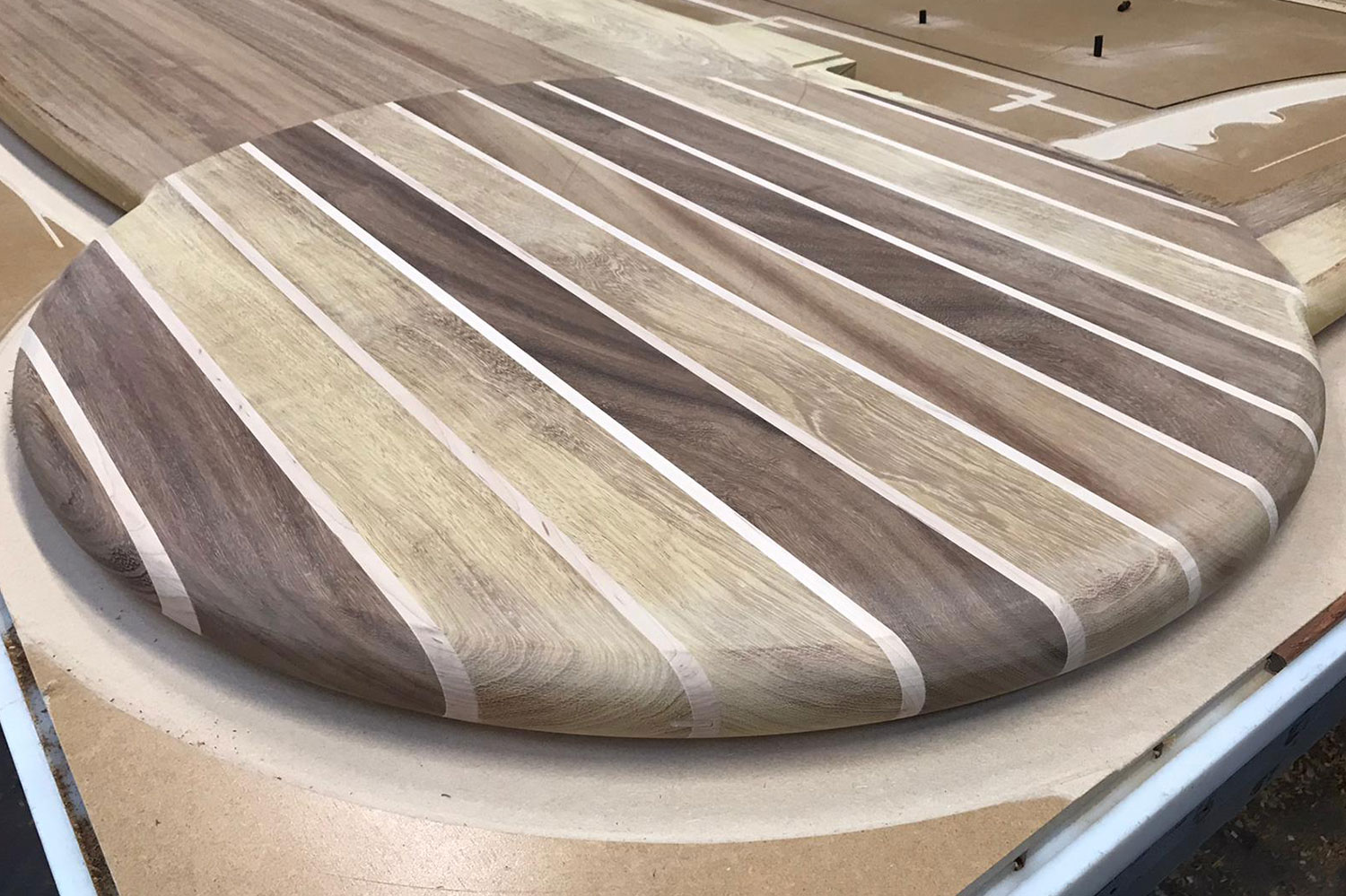
Laminated timber is surprisingly common. It is often used to achieve an increased thickness or width of product which would otherwise be unavailable or uneconomical. For example, Beech trees are by nature quite narrow, so to get wide components in Beech it is necessary to edge-laminate the boards.
Timber may also be laminated to increase the strength & stability of the product, particularly when solid timber is to be used in exterior applications. We have significant experience of engineering products to ensure durability in harsh external environments.
Engineering for DUrability
Natural tensions within timber cause it to expand, contract, twist and bow when exposed to different temperature and humidity, or following machining/finishing. This creates challenges when seeking to engineer a finished product with fine visual and structural tolerances.
Our capability includes not only the application of adhesives and applying pressure to the lamellae, but also design for durability and careful preparation of the timber prior to gluing. We adopt an engineering approach to ensure the best glue bond possible is achieved, following the adhesive manufacturer's requirements. This includes:
- product design input, taking into account any machining or further processing following lamination, to ensure the product will be as stable, and as economical to manufacture, as possible;
- calculating the pressure requirement against the surface area of the parts in the press, and the timeframe for which the timber must be under pressure, to comply with the adhesive manufacturer's requirements;
- sawing, planing and sanding the timber to ensure maximum acceptance of the adhesive into the fibres;
- controlling the temperature and humidity of the timber's environment before, during and after gluing; and
- ensuring the required pressure is maintained throughout the time under pressure.
Once timber has been laminated, we can then machine it, sand it, finish and assemble it.
Contact us to Learn more
Please send your requirements, and any drawings/CAD files, to enquiries@lydwood.co.uk to obtain a quotation for your project.